

The 10th Academia Sinica Conference on Law and Science (ASCLS) Explores the "Digital Self": Data, Capital, and Justice
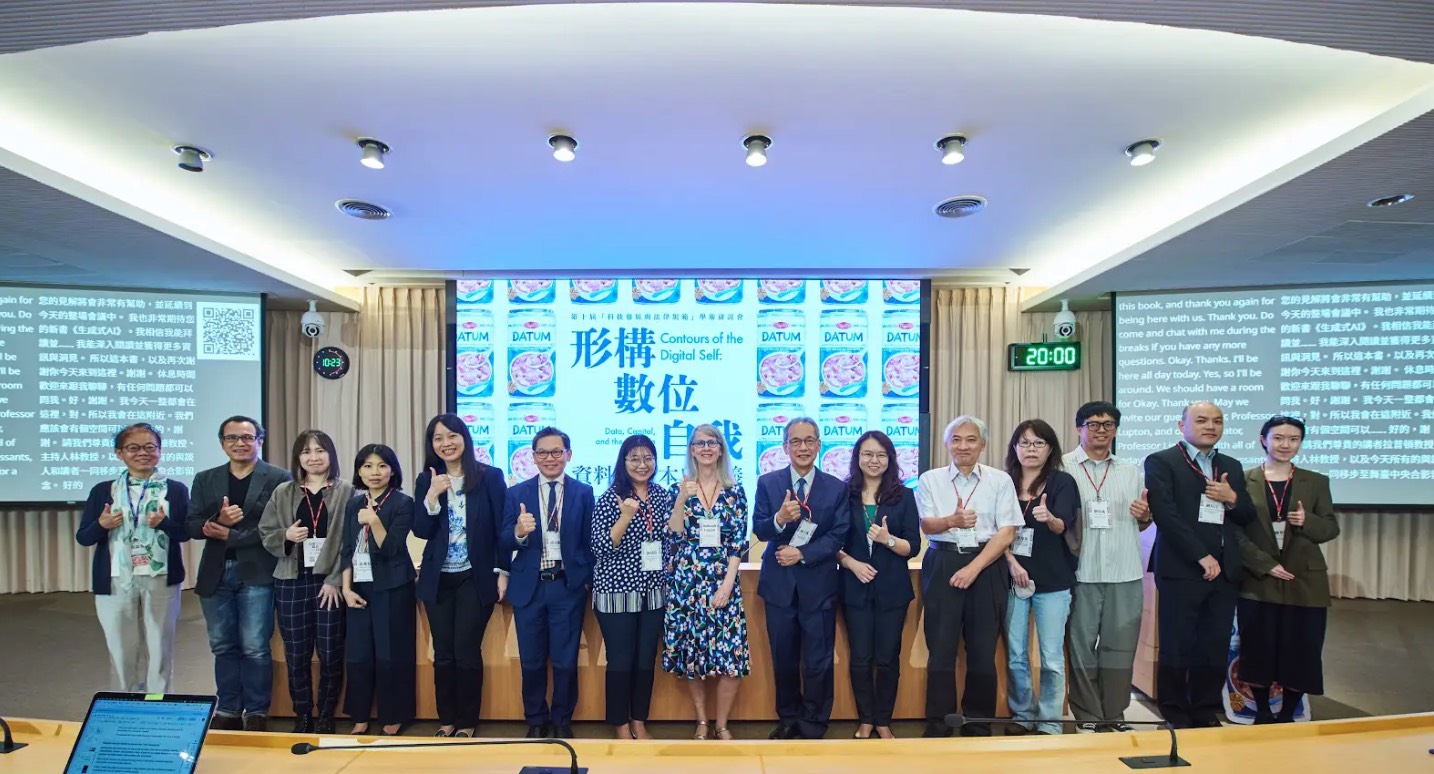
The 10th Academia Sinica Conference on Law and Science (ASCLS), co-organized by the Institutum Iurisprudentiae, Academia Sinica (IIAS), and the Taiwan AI Center of Excellence (AICoE), recently concluded successfully. Under the theme "Contours the Digital Self: Data, Capital, and Justice," the conference brought together scholars from the fields of law, sociology, public health, and anthropology to examine how generative AI and information technologies are reshaping human self-perception, social power structures, and legal systems.
In his opening remarks, Dr. Tzu-Yi Lin, Adjunct Research Fellow and former Director of IIAS, highlighted the extent to which digital data has become embedded in everyday life. Raising fundamental questions such as "Who controls data?" and "Who benefits from it?", he called on the legal community to critically reassess existing regulatory frameworks in response to the power imbalances arising from rapid technological development.
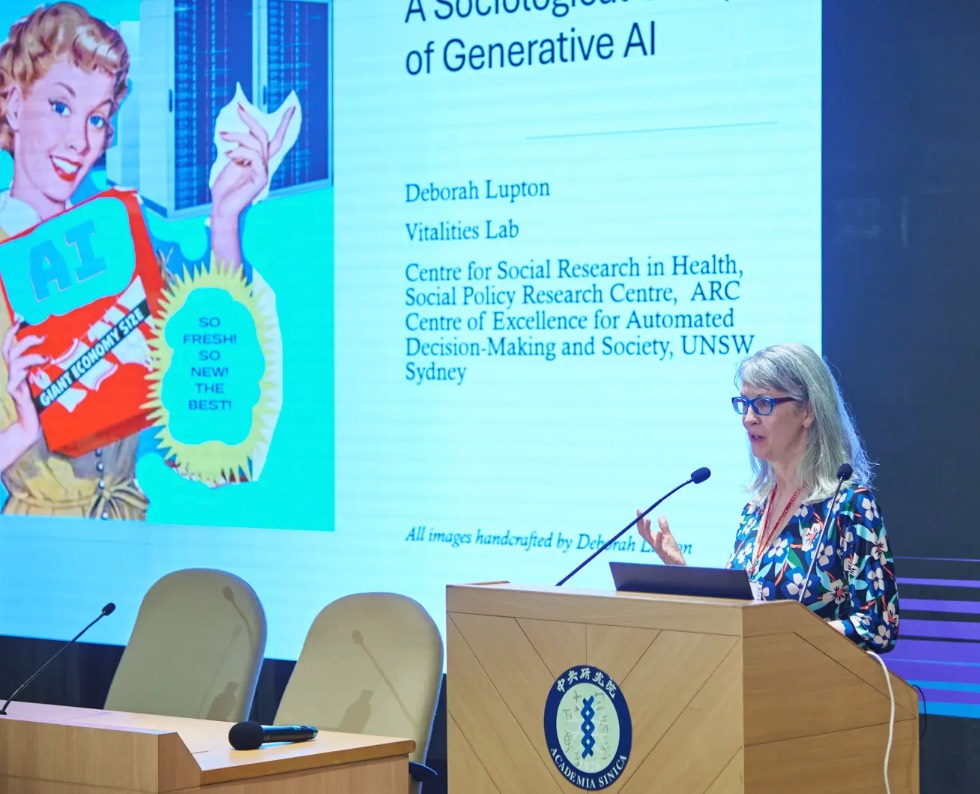
The conference featured a keynote address titled "Sociological Critiques of Generative AI," delivered by Professor Deborah Lupton, SHARP Professor in the Faculty of Arts, Design & Architecture at UNSW Sydney and a Fellow of both the Academy of the Social Sciences in Australia (ASSA) and the Australian Academy of Health and Medical Sciences (AAHMS). Professor Lupton examined the exploitative dynamics of capital underlying the promises made by technology giants. She drew attention to the marginalization of data-labeling workers in the Global South, as well as the substantial environmental costs of hyperscale data centers, including their energy and water consumption and carbon emissions.

The conference also showcased cutting-edge interdisciplinary research. Research Fellow Wen-Tsong Chiou analyzed foundation models as modern "regimes of truth" and general-purpose infrastructure, warning that Traditional Chinese democratic corpora risk being marginalized amid geopolitical competition. Project Manager Andrea Wei-Ching Huang and Professor Chyi-In Wu from the Institute of Sociology introduced the "Collective Data Bias" (CDB) ontology, illustrating how human-machine feedback loops perpetuate structural biases. Drawing on John Rawls's Theory of Justice, Associate Research Fellow Chuan-Feng Wu examined distributive conflicts arising from the multiple resources associated with data. From a public health perspective, Assistant Professor Wayne Hsuan-Wei Lee and his team at Lehigh University used mathematical models to demonstrate how biased AI-generated vaccine information can exacerbate health inequalities. Turning to the governance of the open web, Associate Research Fellow Shun-Ling Chen examined how regulations governing web scraping affect the open web, highlighting the implications for independent research and public oversight. Finally, Song-Yueh Perng of National Yang Ming Chiao Tung University and Tzu-I Lee of National Taiwan University of Science and Technology advocated moving beyond individual consent frameworks toward a model of "relational governance" for AI voice cloning.
The conference also featured lively discussions on topics ranging from competition law and digital advertising to the regulation of ambient intelligence.
Through interdisciplinary dialogue and critical reflection, IIAS seeks to challenge technological determinism. Amid the rise of data capitalism, the Institute aims to help society re-examine and reaffirm its ethical boundaries, thereby laying a just and forward-looking institutional foundation for the protection of human rights and the promotion of the rule of law in the digital age.
* For the conference agenda, presented papers, and additional resources, please visit the conference website: https://iias-infolaw.github.io/10th-conference/